



The permanent
Smile Solution
Losing a Permanent Tooth
Does Not Mean Losing Your Confidence
What Is a Dental Implant?
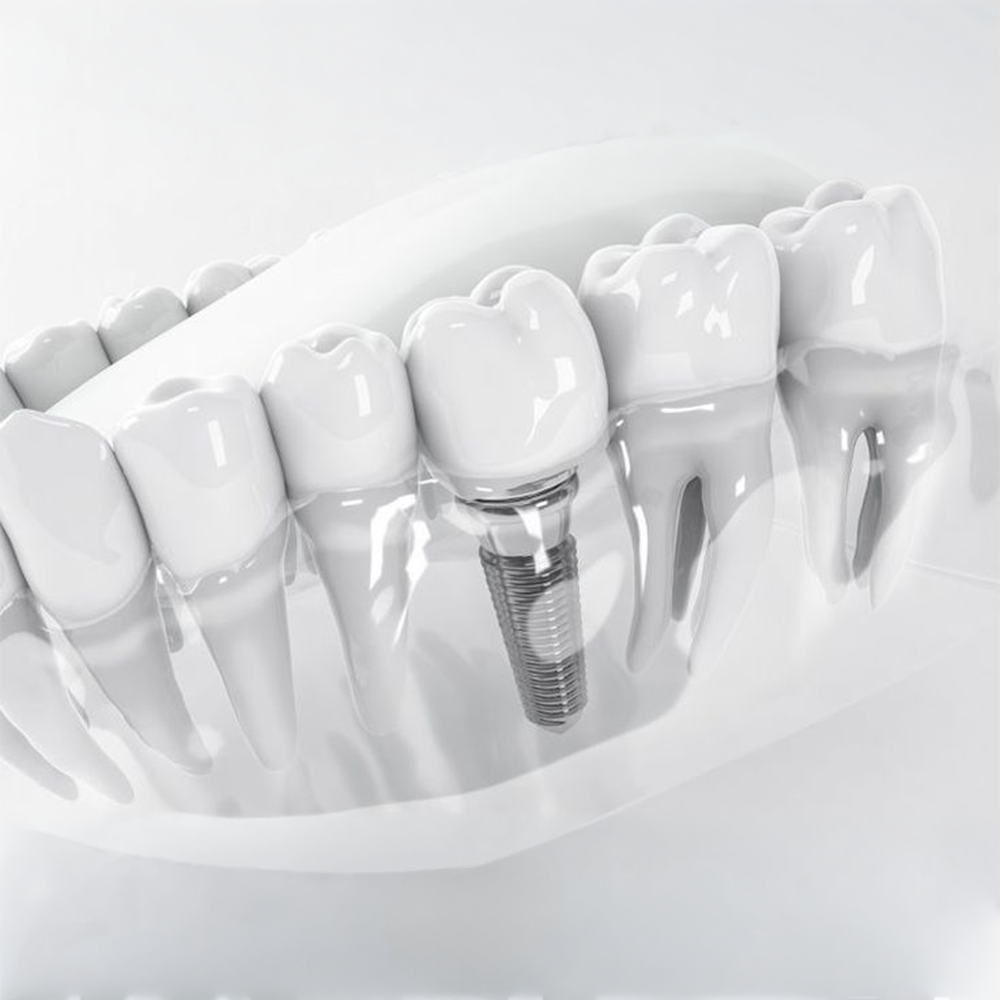
A dental implant is a titanium post shaped like a natural tooth root. It is surgically placed into the jawbone to replace a missing tooth root and provide a strong foundation for a crown, bridge, or denture. Dental implants can restore both appearance and function, creating replacement teeth that look natural and perform similarly to real teeth. They are considered one of the most advanced and effective solutions for replacing missing teeth.

Restore Your Confident Smile with Dental Implants
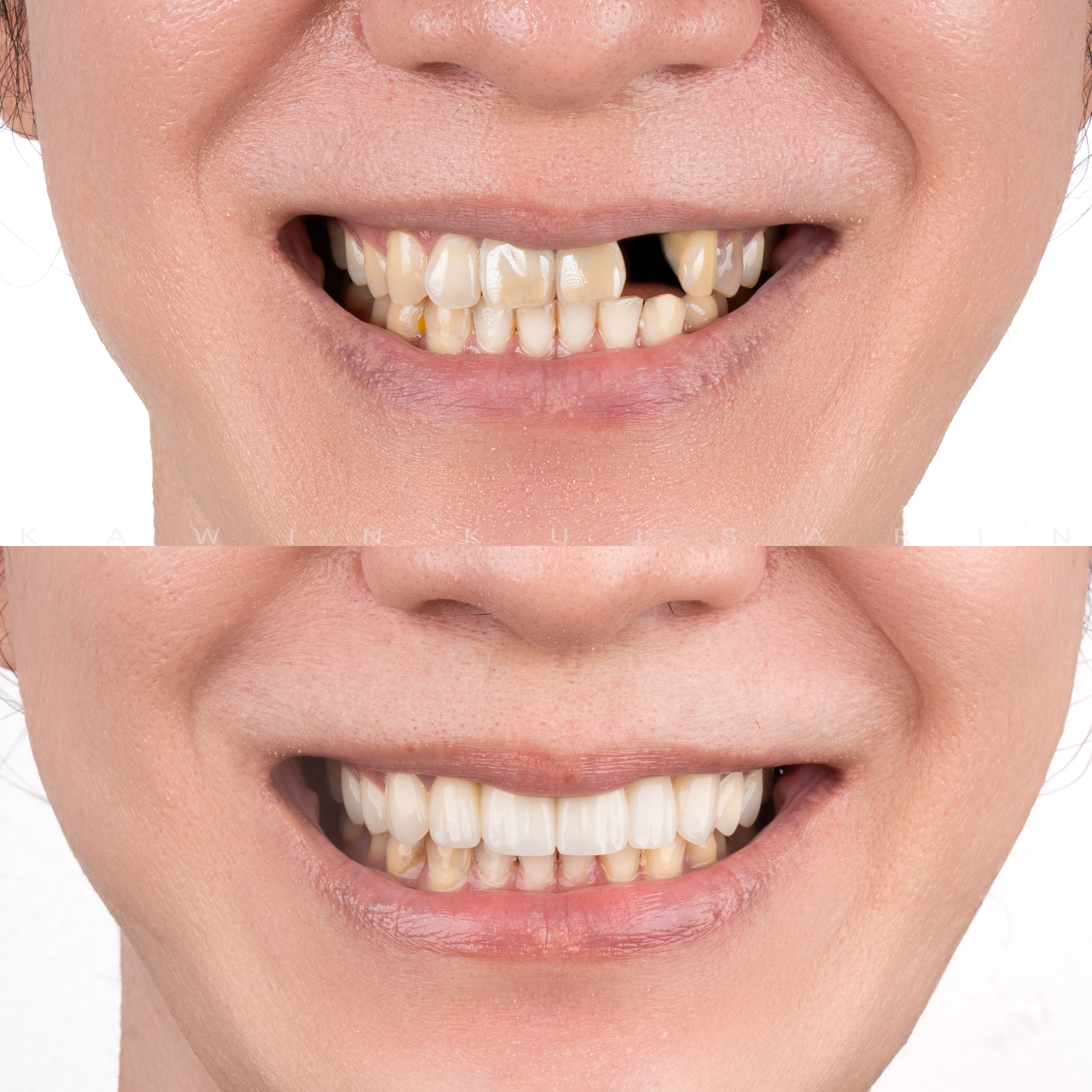
Tooth loss, regardless of the cause, can affect both dental function and self-confidence. Dental implants provide a long-term solution by replacing the missing tooth from the root to the visible crown. The result is a strong, durable, and natural-looking replacement tooth that allows you to chew comfortably and smile with confidence again.
4 Dental Problems That Dental Implants Can Address
Dental Implant Procedure
1. Consult a Dentist to Assess Your Suitability
Dental X-rays, panoramic films, or CT scans may be taken to assess the jawbone and create an appropriate treatment plan. The dentist will explain how to prepare for each stage of treatment. For example:
-
For patients in good general health, the dentist may be able to place the dental implant and abutment during the same appointment. In some cases, a dental crown may also be placed together with the implant.
-
For patients with a weakened immune system or a history of organ transplantation, the dentist may prescribe antibiotics before and after each oral surgery procedure.
-
If the patient has a medication allergy or sensitivity to medicines used during implant surgery, the dentist will adjust the treatment plan accordingly.
-
If the jawbone needs additional preparation before implant placement, the dentist may include bone grafting or other grafting procedures in the treatment plan.
2. Prepare the Implant Site
The dentist may perform a bone graft if the jawbone is not thick or strong enough to support the dental implant. Any damaged tooth may also be extracted to prepare the area for implant placement. The bone and extraction site must then be allowed to heal before the next stage of surgery.
3. Schedule the Surgery and Prepare in Advance
Once the surgery date has been confirmed, patients should get sufficient rest and follow the dentist’s instructions regarding fasting before surgery. They should also prepare for recovery and maintain proper oral care after the procedure.
-
Prepare soft foods and any prescribed pain-relief medication.
-
Plan to take 1–2 days off work after surgery.
-
Avoid strenuous exercise for approximately one week after surgery.
4. Implant Assessment and Crown Placement
Once the dentist confirms that the implant has fully integrated with the surrounding jawbone, an abutment is attached to the implant. The new dental crown is then securely placed onto the abutment to complete the restoration.
5. Follow-Up Appointments
The dentist will schedule follow-up appointments during the first 1–2 months after surgery to monitor healing and treatment progress. Annual dental check-ups are also recommended to maintain the implant and overall oral health.
How Long Do Dental Implants Last?
Dental implants are designed to last for many years because they are made from strong titanium that integrates well with the surrounding bone and gum tissue. With proper care, they may last 10–20 years or longer. If the implant remains healthy and free from inflammation, it may last a lifetime.